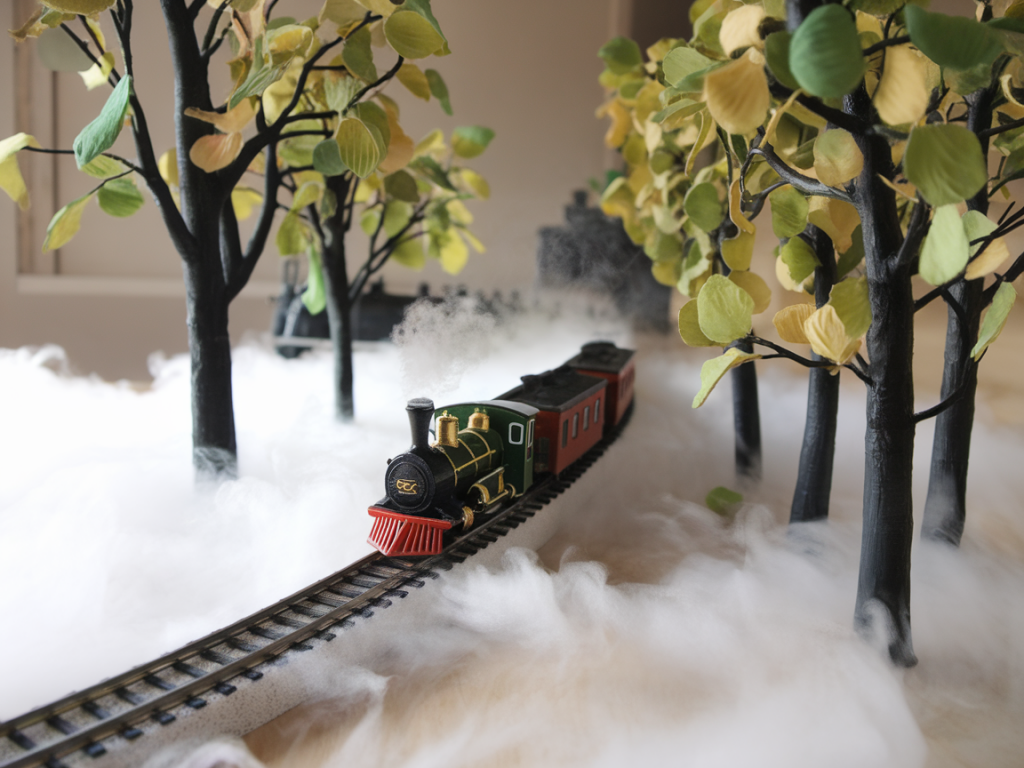
I love adding little moments of surprise to my tabletop scenes, and one of my favourite tricks is a convincing miniature fog that hugs buildings, creeps through alleyways or pools in low spots. After a lot of tinkering I've settled on a simple, cheap, and surprisingly controllable technique that uses glycerin, cotton and a small aquarium/fountain pump. It gives a slow, clinging fog perfect for dioramas, model railways and tabletop roleplay setups — and you can make it with stuff from a craft shop and an e‑commerce order.
What this method actually does (and what it doesn’t)
This isn’t a smoke machine: the effect depends on viscous mist — tiny droplets of a glycerin/water blend carried through cotton fibres by a small pump. The glycerin helps the droplets cling together and to surfaces, producing a low, slow fog rather than a fast, billowing cloud. It’s ideal when you want fog that lingers around bases and low angles and reads at dollhouse or 28mm scale.
Materials I use
- Small submersible aquarium pump or micro fountain pump (5–10 W; brands like Tetra or SunGrow have inexpensive options).
- Flexible silicone tubing to fit the pump outlet (3–6 mm inner diameter depending on the pump).
- High‑purity vegetable glycerin (also sold as glycerol) — find it in pharmacies or online.
- Distilled water (reduces mineral deposits).
- White polyester craft stuffing or cotton batting (avoid raw cotton that sheds heavily).
- Small plastic trays, shallow containers, or resin bases to hide reservoirs.
- Hot glue, craft foam or foamboard to create baffles and hide pump/tubing.
- Optional: small LED tea lights, RGB LEDs for coloured effects.
Mixture ratios and why they matter
After many experiments I found a sweet spot: 10–20% glycerin to the total volume of liquid. For a small reservoir (100 ml) that’s 10–20 ml glycerin mixed into 80–90 ml distilled water. Less glycerin produces a thinner, wetter mist that evaporates quickly; too much (above ~30%) makes the liquid too viscous and clogs pumps and tubing.
| Reservoir (ml) | Glycerin ml (10%) | Glycerin ml (20%) |
|---|---|---|
| 50 | 5 | 10 |
| 100 | 10 | 20 |
| 200 | 20 | 40 |
How I build the fog system (step‑by‑step)
- Prepare the reservoir: use a shallow plastic container hidden under the diorama base or tucked behind scenery. Add the glycerin/distilled water mix and stir gently.
- Position the pump in the reservoir. Attach the silicone tubing to the pump outlet, pushing it on firmly — glycerin is sticky, so a snug fit helps prevent leaks.
- Run the tubing up through the scenery to the location where you want fog to appear. I often hide the tubing along the edge of a wall, under foliage or inside a chimney piece.
- Stuff a small amount of polyester batting into the area where the tubing ends, so the tube presses into the fibres. The batting acts like a wick and diffuser; it breaks the flow into many small droplets.
- Tweak pump flow: many cheap pumps have an adjustable outlet tab. Start on low and gradually increase until you see a gentle, slow fog. If the pump is too strong you’ll get splashes and wetting.
- Shape the fog: use tiny baffles (hot glue strips, foam) to direct and break the fog around buildings. LEDs placed behind the fog sell the illusion further.
Placement tips for scale believability
- Keep the exit point low — fog looks most natural when it hugs the ground or clings to low walls.
- Use textured surfaces (moss, static grass, burnt sponge) to catch and hold the fog for longer.
- For volumetric effects, have multiple low exits at different points rather than one strong source; this makes the fog appear to fill the scene.
Common problems and fixes
- Pump spits and splashes: Reduce flow, add a larger wick (more batting) to smooth the output, or lower the pump deeper in the reservoir to stabilise suction.
- Clogged tubing or sticky pump: Flush with warm water and a splash of white vinegar, then run clean distilled water through until clear. Avoid letting high‑glycerin mixtures sit in the pump for weeks.
- Fog is too watery and dissipates fast: Increase the glycerin percentage a little (towards 15–20%) and use finer batting to create smaller droplets.
- Residue on models: Glycerin can leave a slight tacky sheen after prolonged contact. Wipe painted surfaces gently with a damp cloth after sessions, or mask delicate paintwork and electronics.
Safety and maintenance
Glycerin is non‑toxic in small quantities and commonly used in cosmetics, but keep it out of eyes and avoid ingesting. Because the system involves water near electronics, use a fused plug and keep the pump wiring tidy and dry. Never submerge pumps not rated as submersible.
Empty and clean your reservoir after 2–3 sessions to prevent microbial growth. Store glycerin sealed and away from heat. If you plan to run the fog for long tabletop sessions, monitor humidity — prolonged moisture can harm paper models and some paints.
Variations and creative ideas
- Colour the fog subtly using LED backlighting — warm amber for street lamps, cool blue for moonlight scenes. I prefer LEDs because adding dye to glycerin can stain models and is messier.
- Create a burst effect by using a small inline squeeze bulb or syringe on the tubing to force a puff of fog at the start of an encounter.
- Combine with an ultrasonic humidifier element for higher volume fog behind the scene while keeping low glycerin mist in the foreground for scale.
- Add scent drops to the reservoir for immersive tabletop sessions (use sparingly and test first — scents can be strong in enclosed spaces).
Why I like this approach
It’s playful and low‑tech: you can prototype on a model stand before committing to a final layout, and the components are affordable. The fog reads beautifully in photos and in person because it’s slow and tactile — it interacts with surfaces rather than simply hanging in the air. For me, that sense of physical interaction is what makes a miniature scene feel alive.
If you try it, tell me what you made and any tweaks you discovered — I love hearing different approaches and seeing photos of fog hiding between a ruined wall or spilling from a tiny chimney. Happy experimenting!