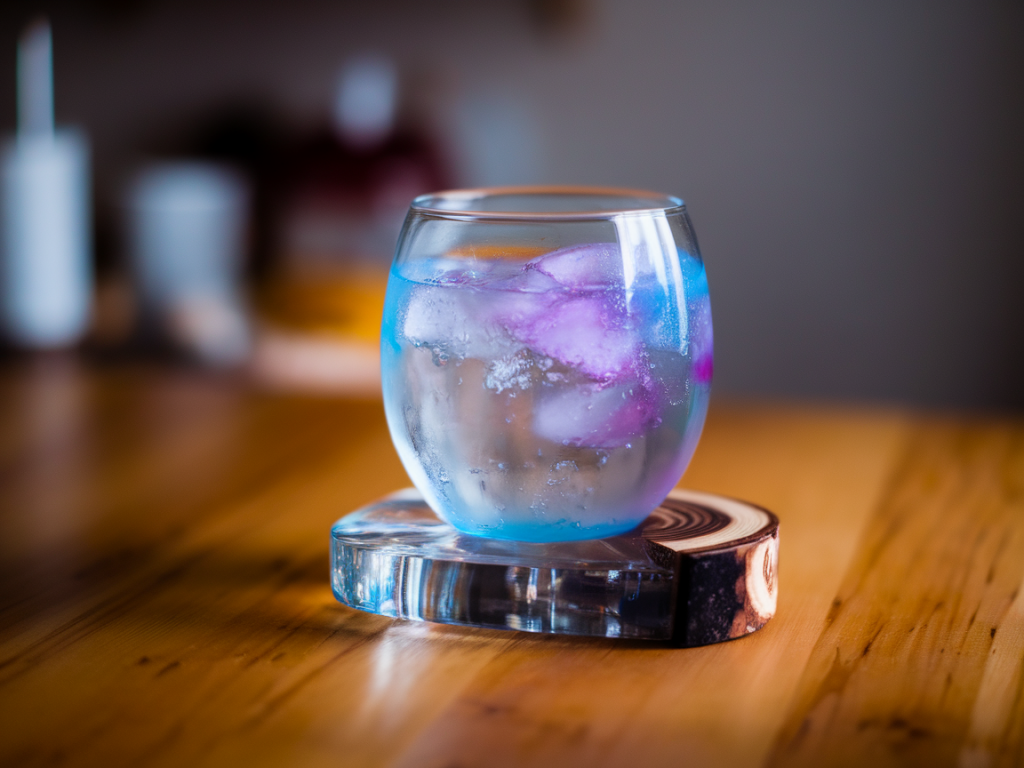
I love the little surprises that happen when a flat surface suddenly looks like liquid—when paint, paper or a tiny vignette becomes a glossy pool of reflected light. Lately I’ve been photographing small “resin water” scenes for postcard-sized dioramas and tutorials, and I’ve developed a simple recipe for capturing silky, even reflections without a light tent. If you don’t have a professional softbox, don’t worry: most of the diffusers you need are already in your house.
Why skip the light tent?
Light tents are great for 360° soft light, but they can feel bulky and restrictive if I want to work on the scene while shooting (tweaking tiny props, tilting a painted figure, adjusting a paper ripple). Using household diffusers keeps everything flexible: I can move lights and reflectors in real time, make subtle compositional changes, and create that silky reflection we all chase when photographing shiny surfaces like resin or glazed puddles.
What I mean by “resin water”
When I say “resin water” I’m referring to either a real epoxy pour or a convincing stand-in: a sheet of clear acrylic or glass, a glossy varnish over a painted base, or a thin layer of clear-drying glue. The same photographic principles apply—the goal is to create an even, mirror-like surface and control the highlights so they’re soft and flattering rather than specular and harsh.
Materials (all household-friendly)
Simple setup — the airy, reflective pool
Here’s my go-to arrangement for silky reflections without a tent. I set this up on a table near a window or indoors with controlled ambient light.
Camera settings and technique
I shoot most of these scenes on a tripod to keep the plane sharp and to allow for longer shutter speeds when needed. Below is a quick reference table for typical starting settings—adjust for your camera, lens and ambient light.
| Parameter | Starting Value | Why |
|---|---|---|
| Aperture | f/5.6 – f/11 | Enough depth for miniature scenes while keeping backgrounds soft |
| Shutter speed | 1/4 – 1/60 s (or longer with tripod) | Use slower speeds for lower ISO and smooth exposure |
| ISO | 100 – 400 | Keep noise low—resin reflections reveal grain easily |
| White balance | Auto or set to Daylight/Custom | Match the light source; tweak in RAW |
| Polariser | Use if glare is a problem | Reduces specular highlights and increases color saturation |
Household diffusers and what each does
Different materials give subtly different results. I experiment with combinations depending on whether I want a soft glow, directional rim light, or a dark, moody reflection.
Controlling unwanted specular highlights
Specular highlights (small bright spots) are the enemy of silky reflections. Here’s how I tame them:
Compositional tips that make reflections sing
I treat reflections like a second subject. Sometimes I compose symmetrically so the reflection becomes a mirror extension of the object; other times I offset the subject so the reflection is a subtle counterpoint. A few tricks I use:
Troubleshooting common problems
If the reflection is noisy, increase light and lower ISO. If highlights are blown, softening the diffuser or increasing distance to the light source usually helps. If the surface picks up fingerprints and dust (it will), use a microfiber cloth and compressed air—resin and glass show every speck distinctly.
I’ll often shoot a bracketed set (multiple exposures) so I can blend in post if highlights need taming or shadow detail needs rescuing. Shooting RAW is a must for these scenes—there’s frequently a subtle play between shadow and highlight that benefits from gentle recovery.
If you want to try this with a real epoxy pour, remember to photograph only when the surface is fully cured—dust and pots of pigment can settle and leave marks while the resin is setting. For a quick practice run, a sheet of glass or acrylic paired with a painted backdrop under the glass will teach you everything you need to know.
On Maxthemagician Co (https://www.maxthemagician.co.uk) I’ll be posting step-by-step tutorials soon showing how I paint miniature scenes that sit beneath resin “water”—so if you try this recipe, send a photo or a question. I love seeing what others make when they borrow a little light and a lot of imagination.