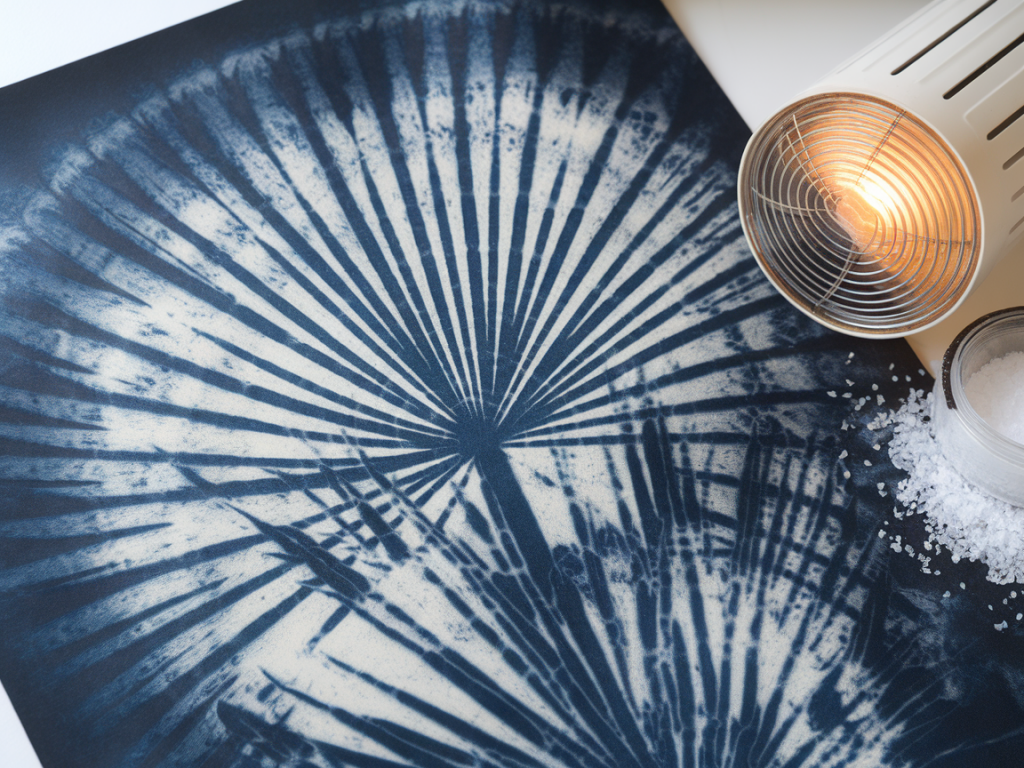
I love the soft, dreamy look of sun‑bleached cyanotypes — those faded indigo prints that feel like memories captured on paper. But sometimes you want that same weathered, botanical, salty texture on a prop or in a collage without dealing with light‑sensitive chemistry. Over the years I’ve developed a simple, forgiving way to fake that look using everyday kitchen tea, sunlamps (or daylight), and delicate salt washes. The results are convincingly vintage: irregular gradients, subtle bleaching, and occasional salt blooms that read like authentic cyanotype artifacts.
Why fake cyanotypes?
People ask me why bother faking the real process. True cyanotypes have a particular chemistry and glow that you can’t entirely mimic without ferric ammonium citrate and potassium ferricyanide. But for props, stage sets, or mixed‑media pieces I want the visual language of cyanotype without the permanence (or the smell) of chemistry, or when I need to tint images rather than pure Prussian blue. This tea‑and‑salt method gives me control over intensity, surface texture, and tonal warmth while staying fully archival if I varnish properly.
What you’ll need
I keep this list minimal so it’s accessible to most makers. Everything is available at a kitchen, craft store, or online.
Paper: heavyweight drawing paper (200–300gsm), cotton rag paper, or cartridge paper work wellTea: strong black tea (English Breakfast, Assam) or rooibos for warmer tonesSunlamp or strong daylight: a 100W halogen worklight, a studio daylight lamp, or direct sun for several hoursFine table salt and coarse sea saltSpray bottle and soft brushVinegar (diluted) or hydrogen peroxide (optional for stronger bleaching)A tray or shallow dish for soakingMasking tape, stencils, or cut silhouettes for blocking areasFixative or matte varnish (spray) to seal the final pieceBasic idea — how it works
The method plays with three simple effects:
Tea stains give a warm, tannin‑rich base coloration that reads like sun‑faded paper.Exposure to intense light (sunlamps or the sun) bleaches and softens the tea stain, creating gradients and "sunspots".Salt crystals, applied wet, absorb and lift pigment locally as they dry, leaving irregular pale blooms similar to cyanotype salt effects.Step‑by‑step: a core recipe
Work on a protected surface and wear old clothes — tea can stain. I usually work with sheets taped flat to a board to avoid warping.
1) Prepare the tea bath: steep 4–6 strong tea bags in about 500ml warm water for 10–15 minutes. The longer it steeps, the richer the tannins. Strain and allow it to cool until warm but not hot.2) Pre‑treat the paper: tape the edges of your paper to a board if you want it to dry flat. For a more textured look, use rag paper without stretching. Lightly mist one side of the paper with clean water to aid even absorption.3) Soak or paint the tea: you can either immerse the whole sheet in the tea bath for a uniform base, or use a large soft brush to paint uneven washes. I often notch the paper in some places by adding more concentrated brush applications to create darker patches.4) Apply masking: once the tea is still wet but tacky, apply stencils, negative cutouts, leaves, or small objects to block light and preserve darker silhouettes. You can also use torn paper pieces for soft edges.5) Salt treatment: while the tea is still wet, sprinkle coarse sea salt in areas you want to bloom. For delicate speckles, use fine table salt. The salt will draw liquid and pigment, creating pale halos as it dries.6) Light exposure: place the prepared sheet under a sunlamp or in direct sun. Exposure from 30 minutes to several hours will change the tonalities depending on lamp strength. I check every 15–30 minutes — the paper will progressively bleach and reveal luminous paler edges where salt is concentrated.7) Optional boost: if you want stronger bleaching, carefully dab a tiny bit of diluted vinegar (1:4 with water) or a weak, 3% hydrogen peroxide solution in specific areas before exposure. Test on a scrap first — these will accelerate bleaching dramatically.8) Remove salt and dry: after the piece has developed to your liking, brush off the salt crystals gently (they may have left small pits or pale rings). Let the paper dry completely.9) Seal: finish with a matte spray fixative or varnish to protect the surface and reduce future color shift. I like a UV‑protective spray if the piece may see daylight.Timing and variations
| Method | Exposure | Result |
| Sunlamp (100W halogen, 30–60cm) | 30–120 minutes | Controlled, warm bleaching; predictable gradients |
| Direct sun | 1–4 hours (varies by weather) | Vivid contrasts, more unpredictable natural fading |
| Indoor lamp + peroxide dab | 10–30 minutes | Sharp local bleaching, but harsher edges |
Common questions people ask
What paper gives the most authentic feel? I prefer cotton rag or heavyweight cartridge paper because they absorb tea richly and dry with a soft tooth. Cheap photocopy paper often wrinkles and looks flat.
Will the stains fade over time? Tea is an organic stain and can fade if exposed to strong UV. Sealing with a UV‑protective varnish slows this. If archival permanence is essential, consider making a digital print of your finished piece and coating that instead.
Can I layer with other media? Absolutely. Once sealed, these surfaces accept pencil, gouache, ink, and light collage. I sometimes add white gouache highlights to mimic the brightest cyanotype edges.
Is it safe to use hydrogen peroxide? Yes in low concentrations (3%) and applied sparingly. It accelerates bleaching but can weaken paper fibers if overused. Always test.
Tips from my sketchbook experiments
Make a set of test strips: different teas (black, green, rooibos), salt types, and lamp distances produce surprisingly varied results.Use found objects like lace, dried flowers, and string for delicate negative shapes — they give a convincing botanical cyanotype effect.Control the dryness: for softer halos, allow the paper to dry very slowly by covering it loosely with a plastic sheet to retain humidity; for crisper salt blooms, speed drying with a fan.Combine with real cyanotype details: if you’re not strictly avoiding chemistry, you can mix a small cyanotype print into a tea‑washed sheet for hybrid authenticity.This method is tactile and generous: it invites happy accidents and encourages you to respond to the way the paper changes in the light. The tea gives warmth, the sun gives time, and the salt gives those serendipitous blooms. Try it on single sheets, book pages, or props for theater — and please tell me what you make. I’m always excited to see how others adapt these little alchemical gestures into their own projects.