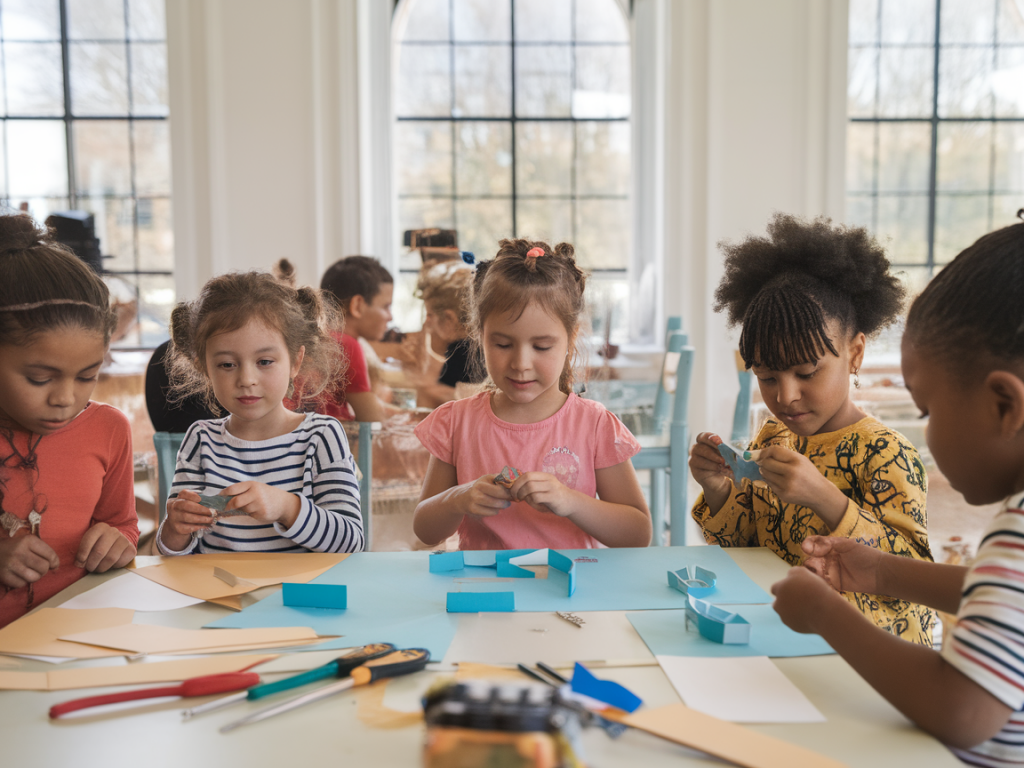
I remember the first time I introduced paper mechanics to a roomful of people ranging from six to sixty. There was a hum of concentration, a flurry of scissors, and — thank goodness — a handful of moments where everyone stopped, looked up and grinned when something unexpectedly sprang to life. Teaching a mixed-age group can feel like choreography: you want activities that are simple enough for younger hands, rich enough for older makers to adapt, and forgiving enough that mistakes become discoveries. Below are three foolproof starter projects I use again and again. They’re low-risk, portable, and full of room for creative flourish.
How I plan a mixed-age session
Before diving into the projects, here are a few principles I follow. They help keep the workshop calm, inclusive and productive:
- Prep work: pre-cut fiddly parts for younger kids and have a few “challenge” pieces ready for teens/adults who want to experiment.
- Layered instruction: give a short whole-group demo, then circulate with targeted small-group prompts. Often the youngest just need encouragement and one clear example.
- Shared materials: communal trays with glue sticks, scissors (including kid-safe scissors), and rulers encourage collaboration and reduce waste.
- Time chunks: aim for 20–30 minute blocks per project with built-in ‘show-and-tell’ moments to keep attention across ages.
- Celebrate mistakes: show a ‘failed’ sample and how a fix or alteration turned it into something else.
Starter project 1 — The Sliding Character (cabinet-pull mechanism)
This is my go-to first exercise. It teaches a simple slider mechanism that can be used to make characters move, reveal messages, or trigger small actions. It’s quick, forgiving and visually satisfying.
Materials:
- Cardstock for base (A4 or 9x12)
- Thin card for slider strip (recycled cereal box works well)
- Glue stick and double-sided tape
- Scissors or craft knife (adults only)
- Decorative paper, markers, stickers
- Optional: brads (paper fasteners) for pivoted additions
Steps (simple version):
- Fold the cardstock in half to make a card or keep flat for a single panel.
- Cut a 2–3 cm strip from the thin card — this will be your slider.
- Cut a matching slot across the front of the base card (a short incision about 5–6 cm long). For safety, pre-cut slots for younger makers.
- Glue the slider strip behind the slot so it can move left and right. Add a little tab on the visible end as a handle.
- Attach a small paper character to the visible end of the strip; decorate the front panel so the character looks like it’s emerging or moving across a scene.
Variations for older makers:
- Make parallel sliders to control two characters interacting.
- Create a reveal: cover the slot area with a flap that lifts as the slider moves.
- Add a stop: a paper notch glued inside the slot to limit travel and create staged movement.
Starter project 2 — The Fold-and-Pop Tab (pop-up element)
Pop-ups can sound intimidating, but a simple V-fold or pop-up tab is easy to teach and endlessly adaptable. It’s also a great way to connect drawing and story with mechanics.
Materials:
- Cardstock or heavyweight paper for base
- Thin paper or lightweight card for pop-up elements
- Scissors, bone folder (or back of spoon), glue
- Markers, collage scraps
Steps:
- Make a base card by folding cardstock in half.
- Cut a small rectangle or triangle from the pop-up paper — this will form the V.
- Fold the rectangle in half lengthwise. Make two small cuts on the crease line to create flaps that fold into a V when the card is closed.
- Open the base card and glue the folded piece so it folds inward when the card closes and pops up when it opens — test gently before final glue to adjust the angle.
- Decorate: stick a character, collage element or drawing on the pop-up face.
Teaching tips:
- Show everyone the closed-to-open motion — the visual demonstration makes the geometry obvious.
- For younger kids, use pre-scored shapes and larger pop-up pieces to avoid fiddly folds.
- Invite older makers to experiment with multiple pop-ups, different angles, and layered scenes for depth.
Starter project 3 — The Rotating Wheel (reveal and morph)
This one fascinates all ages because a simple turn can change an image, create animation frames or reveal a hidden message. It’s a gentle introduction to registration (alignment) and framing.
Materials:
- Two circles cut from card (one slightly larger for the frame)
- Split pin/brad or paper fastener
- Decorative pens, stickers, vellum for windows
- Optional: craft glue, washers for smoothing rotation
Steps:
- Cut one circle with a window (a smaller circle or shaped aperture) and another full circle to sit behind it.
- Decorate the back circle with three different faces/landscapes/messages in sectors (like pie slices).
- Place the decorated circle behind the frame and fix them together at the center with a brad — don’t tighten it too much or the wheel won’t turn.
- Spin the back circle to reveal different segments through the window.
Variants:
- Make an animation wheel by drawing slightly different frames in each sector for a flipbook-like effect when spun.
- Use a translucent paper layer for soft reveals.
- Incorporate a simple locking mechanism (a paper tab) so the wheel clicks into place at each step.
Managing materials, pace and group dynamics
Mixed-age teaching is as much about logistics as it is about technique. Here are practical routines I bring to every session:
- Starter station: set up a demo table with samples at eye level for kids and adults. Label stations “Open to explore” and “Ask for help” to nudge independence.
- Material kits: pack small paper bags with pre-cut bases for younger participants and a ‘challenge envelope’ for older ones containing extra elements.
- Checkpoints: after each major step, invite volunteers of different ages to show their work. This builds confidence and gives you a chance to re-explain tricky bits.
- Adapt on the fly: if a part is taking too long, switch to decoration or storytelling — the mechanics lesson often returns later after a rest.
Troubleshooting common hiccups
Here are problems I see most often and quick fixes that keep momentum going:
- Slider stuck: rub a pencil lead or a dry bar of soap along the slider to reduce friction, or slightly widen the slot.
- Pop-up won’t lie flat: re-score the fold, use a bone folder, and check the glued edges for stray glue that keeps it rigid.
- Wheel wobbles: add a small paper washer between the brad head and the top disc to stabilize rotation.
I usually have a small stash of essentials — Pritt stick glue, Fiskars kid scissors, and a package of Split Pins from Ryman — which keeps things running smoothly. The simplicity of these projects means you can scale them up into multi-session workshops (think narrative zines built from sliders and pop-ups) or shrink them into quick icebreakers at a community event.
Teaching paper mechanics to mixed-age groups is a reminder that play and precision can coexist. Give people a clear scaffold, a few reliable tricks, and permission to experiment — and you’ll be rewarded with lively workbenches, clever improvisations and plenty of shared delight.