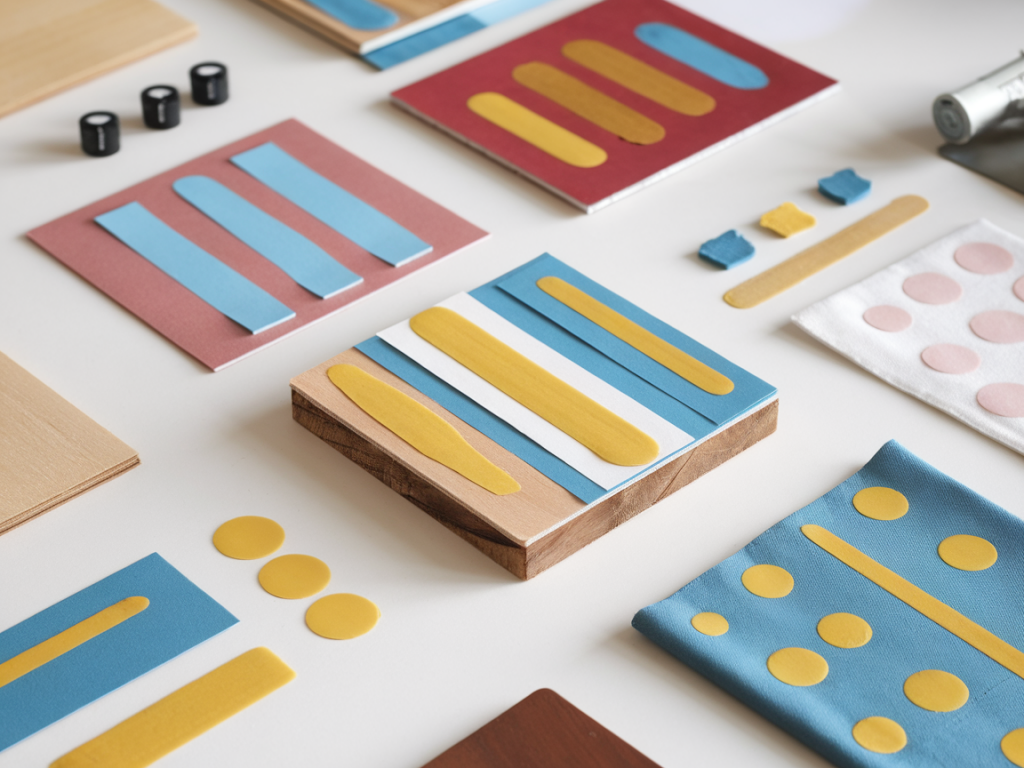
When I'm building a tiny paper automaton, a cardboard puppet or a fabric-wrapped wooden prop, the wrong glue can turn a playful afternoon into an exercise in frustration. Over the years I've learned to run a few quick tests before committing to a full build — they take five to ten minutes, use scraps, and save me a lot of rework. Below I share the straightforward checks I use to choose the right adhesive for models made from paper, wood and fabric.
Why quick tests matter
Adhesives behave differently depending on the materials, humidity, amount applied and how the piece will be handled. A glue that looks perfect on one project can wrinkle paper, bleed through a painted surface, yellow over time, or make fabric stiff. Testing lets you evaluate tack, open time, bond strength, appearance and long-term behaviour before you commit. Think of it as a tiny experiment: cheap materials, big payoff.
My go-to adhesives (short list)
- White PVA / craft glue (e.g., Elmer’s, PVA craft glues) — versatile for paper and lightweight wood; dries clear but can wrinkle thin paper.
- Wood glue (e.g., Titebond) — stronger for joints in card and wood; longer clamp time but excellent final strength.
- Spray adhesive (e.g., 3M Super 77) — great for large paper-to-paper or paper-to-foam areas; avoid where precise seams are needed.
- Hot melt glue (hot glue gun) — fast and forgiving, good for quick prototypes and attaching mixed materials; can be bulky and show through thin paper.
- Contact cement — excellent for non-porous-to-non-porous bonds (veneers, laminates); requires precise alignment.
- Fabric glue / textile adhesive (e.g., Aleene’s Fabric Fusion) — flexible, washable bonds for cloth on wood or paper-backed fabric.
- Double-sided adhesive tape — neat, instant, and very useful for paper layers and clean edges.
- Fusible web / iron-on adhesive (e.g., Wonder-Under) — for fabric-to-fabric or fabric-to-paper with heat activation.
- Epoxy or E6000 — for heavy-duty bonds or attaching metal to wood/paper.
Quick test protocol — simple and repeatable
I keep a “material test sheet” in my sketchbook: scraps of the materials I’m using taped down, labelled with the adhesive and date. Try these tests on each adhesive you’re considering.
- Surface prep and appearance check: Apply a small bead/patch and press. Observe bleeding, discoloration, or paper buckling. Let it dry and note gloss level and whether the adhesive becomes visible.
- Tack and open time: Touch the joint at 10s, 30s, 1 min, 5 min to see how long you can reposition parts. This tells you if you can align moving parts (important in automata).
- Clamp time test: Glue two scraps together, clamp or press them, and record how long until the bond holds under light stress.
- Flex and crease test: Bend the bonded area and try to crease or fold it. Does the bond remain flexible (good for fabric or paper hinges) or does it crack and peel?
- Peel/ shear test: After full cure, try peeling the joint and shearing it sideways. Many glues resist peel poorly but handle shear well — choose based on how the forces act on your model.
- Water and wash test (for fabric): If your piece will be washed or exposed to moisture, let the glue cure then dab with a wet cloth or submerge a tiny piece to see if the bond weakens or the adhesive bleeds.
- Ageing / yellowing check: Place a small sample in sunlight for a few hours or warm it gently. Some adhesives yellow or become brittle over time.
What I look for, by material
Different substrates need different priorities. Here’s how I weigh test results.
- Paper — I care about minimal wrinkling, low show-through, and a clear, non-glossy finish. For layered paper I often use PVA diluted slightly with water or double-sided tape when edges must be invisible. For heavy paper/cardboard I’ll use wood glue for a stronger joint.
- Wood — Strength and gap-fill matter. Wood glues like Titebond make a durable bond and accept sanding; they’re my first choice for structural joints. For quick fixes or mixed-media attachments I sometimes use hot glue then reinforce with PVA.
- Fabric — Flexibility and washability are key. Fabric glue or fusible web keeps the hand of the textile soft. Avoid straight PVA on visible fabric — it stiffens and becomes brittle.
Speedy decision table
| Adhesive | Best for | Pros | Cons |
|---|---|---|---|
| PVA (craft) | Paper, light wood | Cheap, clear-drying, easy to sand | Can wrinkle thin paper; slow drying |
| Wood glue | Wood, thick card | Strong joints, sandable | Longer clamp time; not flexible |
| Hot glue | Mixed materials, quick prototypes | Fast, gap-filling | Bulky bead; visible; can melt thin paper |
| Spray adhesive | Large-area paper/foam | Even coverage, fast | Messy overspray; reposition window limited |
| Fabric glue / fusible web | Fabric to fabric/paper | Flexible, washable | May alter hand; requires heat for fusible |
| Double-sided tape | Neat paper joins | Clean, instant | Not great for load-bearing bonds |
Practical tips I use in the studio
- Always test with the actual paints, coatings or inks you’ll use. Some paints react with wet PVA and cause crinkling or tackiness.
- If a paper edge must look seamless, use thin double-sided tape or a diluted PVA applied with a brush; wipe away excess immediately with a damp cloth.
- For moving joints (rotating paper tabs, small levers) use thin layers of PVA or a flexible fabric glue and avoid hot glue that gums up pivots.
- Label your test swatches with date, adhesive, and ratio (if you dilute). I keep photos in my sketchbook to remember long-term behaviour.
- Consider archival properties: look for acid-free, lignin-free glues if the piece is meant to last or be sold as art.
When to accept a compromise
Sometimes no single adhesive is perfect — and that’s okay. For many hybrid pieces I combine adhesives: contact cement for a firm laminate base, PVA to seal edges, and tiny dots of hot glue for quick temporary holds during assembly. The idea is to use each glue for the property it does best.
If you want, tell me what materials you’re pairing and how the model will be used (display, handled, washed). I’ll suggest a short set of tests tailored to your project — and a couple of preferred products I reach for in the studio.