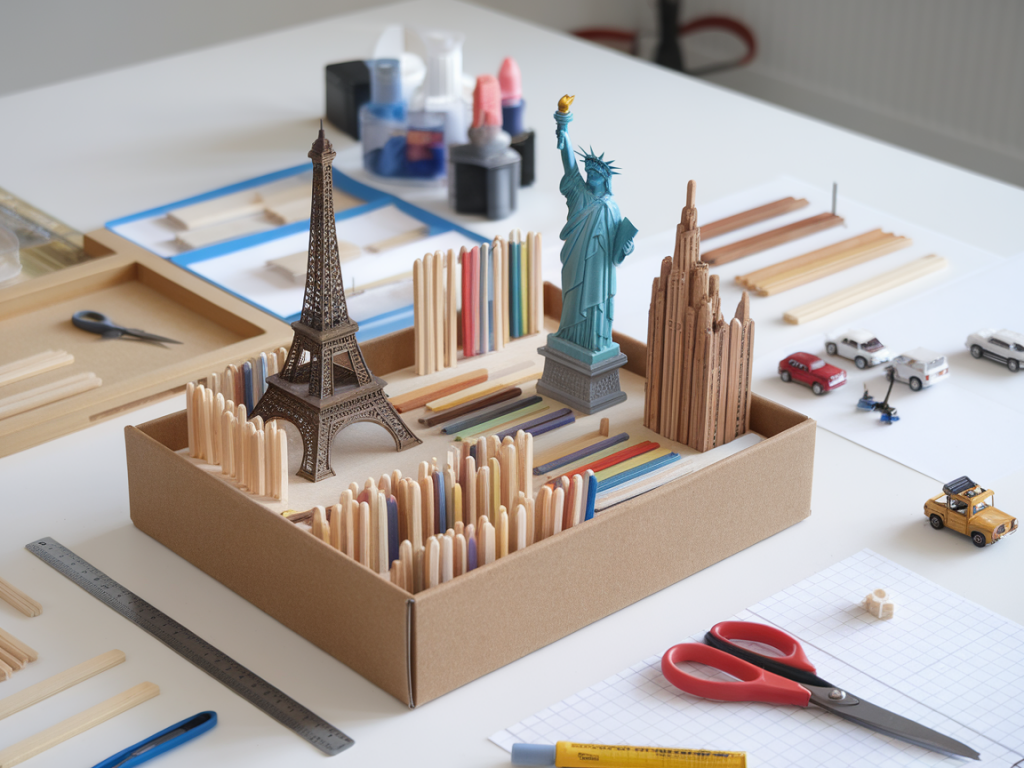
I like small challenges. They force you to make decisions quickly, to invent constraints that sharpen rather than limit, and to find delight in tiny details. Planning a mini exhibition inside a single shoebox is one of my favourite kinds of constraint — it asks me to think like a curator, an engineer and a storyteller all at once. Below I’m walking you through how I plan one from first idea to finished display, with practical tips, useful materials and a few of the little tricks that help a shoebox-sized world feel immersive.
Why a shoebox?
A shoebox is modest, portable, affordable and, crucially, intimate. It fits on a table, can be carried in a tote, and invites viewers to lean in. For me, the shoebox format is an exercise in scale: how do you suggest depth, atmosphere and narrative in a space that’s about the size of a loaf of bread? The constraint pushes experimentation — tiny mechanisms, layered paper sets, scaled lighting — and often leads to ideas I wouldn't have had for larger installations.
Starting with a seed idea
Every mini exhibition begins with a seed: a character, a gesture, a single image. Recently, I started with a sketch of a magician’s hat that looked a little too curious — like it had a mind of its own. From that sketch I wrote a one-sentence story: “A hat keeps a collection of small, lost wonders.” The sentence is deliberately small; it’s a compass that guides choices without over-determining them.
Ask yourself: what small story can unfold in a shoebox? Some prompts that work for me:
- Find a miniature protagonist — an animal, a doll, a found object given character.
- Choose a single action or mood: e.g., discovery, nostalgia, mischief, solitude.
- Decide on one surprising element — a hidden light, a moving part, an optical flip.
Sketching and spatial planning
I move from the sentence to quick thumbnail sketches. These are tiny—often 2–3 per shoebox idea—showing the box opened from a bird’s-eye view and from the front. I mark where the viewer’s eye will land first and where I want them to move next. This helps me prioritize elements when the space is limited.
A practical tip: cut a paper rectangle the size of your shoebox lid and play with scaled paper cut-outs of elements (trees, furniture, characters). Physically moving pieces inside the rectangle quickly reveals sightline problems and suggests where to add layers for depth.
Materials and tools I turn to again and again
I like humble supplies because they allow for quick prototyping and surprise. My usual kit for a shoebox exhibition includes:
- Cardboard and bookboard: for internal walls, risers and fold-out platforms.
- Paper of varying weights: tracing paper for translucency, cartridge paper for drawing, and patterned scrapbooking paper for texture.
- Glue options: PVA for strong bonds, glue stick for paper layers, and a hot glue gun for quick assembly.
- Mini lights: tiny LED tea lights, button-cell LED modules, or strip LEDs (Adafruit and Pimoroni make neat, small components).
- Found objects: beads, matchsticks, little fabric scraps, and thrifted mini frames.
- Paints and pens: gouache for matte colour, white gel pen for highlights, and a few watercolour washes for subtle backgrounds.
- Tools: sharp craft knife, cutting mat, metal ruler, needle files for small holes.
Making depth and atmosphere
Depth in a shoebox is often illusionary rather than physical. I layer flat pieces at staggered distances from the box opening. Tracing paper and vellum are invaluable: they suggest fog, glass or distance when placed in front of a darker layer. A few tricks I use:
- Paint a distant backdrop with soft gradients to suggest sky or a wall receding.
- Use tiny risers made from folded card to lift a midground element slightly above the floor plane.
- Introduce a movable foreground frame — a cardboard “window” glued to the inner lip of the box — to create a sense of a threshold.
Lighting: small changes, big effect
Lighting transforms a shoebox more than any other single element. A single warm LED tucked behind a miniature prop can produce dramatic casts and pockets of mystery. I often combine a warm backlight (button LED) with a cool, dim frontal wash (a diffused LED strip) to create contrast.
Practical lighting notes:
- Hide batteries and switches behind internal partitions or beneath a false floor for a clean look.
- Diffusion is key — trace or baking paper taped over LEDs softens harsh spots.
- If you plan on photographing the box, consider adding a small white bounce card to fill deep shadows for the camera.
Mechanics: simple movement, big charm
One of my favourite moments in a mini exhibition is a small moving part — a spinning hat brim, a sliding drawer, a tiny puppet nod. These don’t need motors. Paper cam mechanisms, elastics and tiny pull-tabs are enough to bring life to a shoebox stage.
For slow, pleasing motion, I often use:
- Elastic bands hidden under the stage for spring returns.
- Brass brads as pivot points for arms or signposts.
- Paper cams: cut a slightly off-centre profile on a wheel; turning it creates an up-and-down motion.
Sound and smell (optional, but memorable)
When appropriate, I’ll add a small recorded sound — a creak, a whispered phrase, or a tiny fanfare — played from a keychain sound module. Smells can be as simple as a dab of waxed paper holding a scent strip (dried lavender, old book scent) tucked into a corner. These senses add layers of memory and make a shoebox exhibition feel larger than its dimensions.
Text, labels and how much story to tell
I resist crowding the box with text. The visual story should be strong enough to stand on its own, but a small caption or a single sentence on a card beside the box helps orient the viewer. For exhibitions that will travel or be handled, I create a clipboard-style note: title, one-sentence prompt and a playful instruction like “Tilt the box gently to wake the hat.”
Documenting the piece
Photographing shoebox exhibitions is part craft, part lighting study. I use a tripod, a small LED panel for fill and a narrow depth-of-field to keep the viewer’s attention where I want it. Shot list I never skip:
- Hero shot: front view, eye-level, showing the whole box.
- Detail shots: tight crops of textures, moving parts, hidden compartments.
- Context shot: the boxed piece on a table with hands nearby to show scale.
Sharing and inviting participation
I love when people are invited to interact. Simple prompts — “Open the little drawer,” “Tilt for a surprise” — turn viewing into making. If I’m posting the project on Max the Magician, I include a step-by-step mini-tutorial and suggest playful variations: scale the idea up to a shoebox-sized diorama, or shrink it further into a matchbox curiosity.
| Project scale | Shoebox (approx. 30 x 18 x 12 cm) |
| Time | Prototype: 2–4 hours | Finish: 1–3 days |
| Key tools | Craft knife, hot glue, tiny LEDs, pencil, paints |
Working in a shoebox reminds me that making doesn’t require grand gestures — sometimes a carefully placed scrap of paper, a hidden light and the right title are enough to conjure a world. If you try one, send a photo. I love seeing the ways other makers translate tiny constraints into big delight.