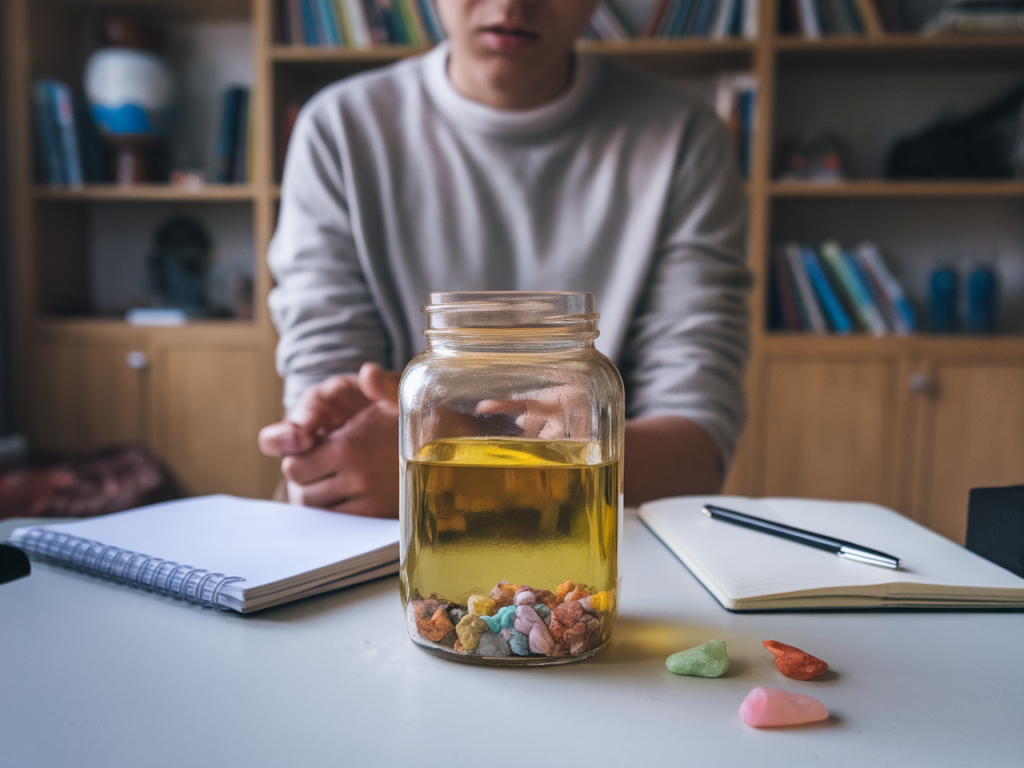
I have a soft spot for experiments that misbehave. There’s a distinct kind of magic that comes out of a failed attempt — a smudge that looks like a map, a torn edge that suggests a silhouette, a mechanism that squeaks in a way that feels charming rather than broken. Over the years I’ve learned to listen to those accidents and coax them into new projects. Here are five approaches I use to turn failures into sources of wonder. They’re practical, playful and written for anyone who likes making things with their hands (and sometimes getting gloriously messy).
See the accident as a prompt, not a problem
When something goes wrong I first resist the urge to tidy it away. Instead I look for what it’s trying to become. That burned patch on a watercolor wash might be a textured landscape; a paint drop could be a planet. I’ve trained myself to ask a few gentle questions:
Once, while testing a new resist technique, the wax didn’t repel the dye evenly — it created a lace-like pattern I hadn’t anticipated. Rather than discarding the sheet, I scanned it, isolated sections in Photoshop and used them as collage elements for a mini zine. The “mistake” became the zine’s visual language. Giving an accident the status of a prompt keeps the pressure off perfection and opens doors to playful solutions.
Harvest fragments — make a material library
I keep a folder and a small wooden tray full of pieces that didn’t quite make it: torn paper, offcuts, botched prints, failed polymer clay tests. These fragments are a literal toolbox. Over time that collection becomes a kind of archive I can dip into when I want to start something new.
When I’m stuck for an idea I make a “fragment collage” — I randomly pull 5–7 bits from the box and force myself to connect them into a composition. Constraints like these often produce more interesting results than a free-for-all because the fragments set surprising limits and relationships that spark creativity. This practice has led to small series of postcard-sized artworks as well as props for stop-motion tests.
Prototype the glitch into a feature
Some failures are mechanical or functional: a paper mechanism chews the tab, a hinge is too loose, a motor pulses strangely. Rather than trying to eliminate the glitch, I explore how it could become an intentional behavior. The step is about prototyping variations that exaggerate the flaw and seeing if it reads as a meaningful action.
For example, a paper puppet I once made had a jerky arm because the joint was too tight. Instead of redoing the whole mechanism, I added a little counterweight and a cheeky spring so the jerk became a signature twitch — a character trait. Now the puppet felt intentional and alive. Tools like the cheap Pololu motors or even a discarded cassette-player motor can add personality when used with playful intent.
Layer with story — give the mishap a voice
I love pairing a visual accident with a short narrative. A stain becomes a character’s birthmark; a torn edge suggests a map to a lost city. Stories are powerful because they give viewers permission to interpret and find meaning. You don’t need to write a novel — a sentence, a caption or a tiny backstory is often enough to transform perception.
When I ran a workshop on “Found Mishaps,” each participant invented a short mythology for their accidental mark. One student’s smudge became “the harbour where lost ideas anchor.” These little stories made the pieces feel intentional and invited viewers to look closer with curiosity.
Iterate in public — share early and remix feedback
Failure often feels private. One of the best ways to demystify it is to put it in front of people early. I post process photos and quick videos on Instagram and my blog (https://www.maxthemagician.co.uk) with candid captions about what went wrong and what I’m trying next. The responses I get are always generous — suggestions, reinterpretations and sometimes outright collaborations.
Once, after sharing ten shaky stop-motion tests, someone suggested adding a tiny paper prop to exaggerate the motion. That simple idea turned the tests into a coherent short piece that I later exhibited. Sharing doesn’t guarantee a breakthrough, but it does surround your missteps with fresh eyes — and often that’s enough to spark a new direction.
There’s no single formula for transforming failure into wonder. The throughline is curiosity: look, collect, experiment, narrate and share. When you treat an accident as material rather than a mistake, you create a space where surprise can flourish. If you try any of these approaches, I’d love to hear what you uncover — tell me what you make, or tag a photo with @maxthemagician so I can see your mischief turned into magic.