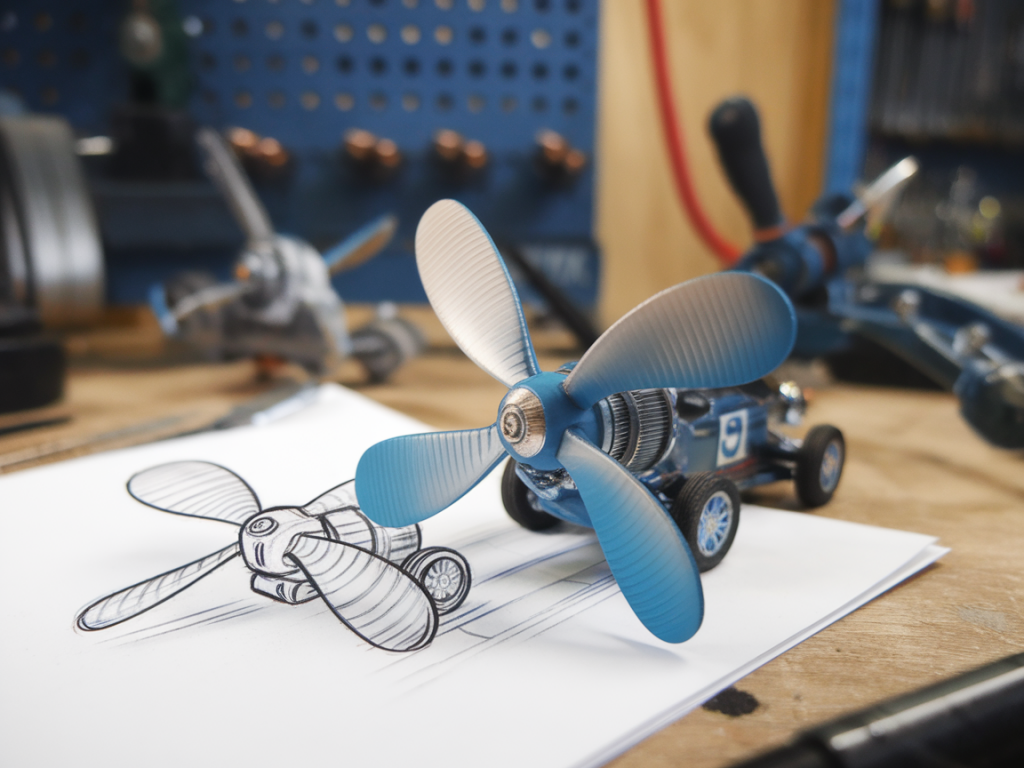
I often get asked how a small idea — a doodle in the corner of my sketchbook — becomes a little mechanical prop that actually moves. Designing tiny paper-and-cardboard mechanisms is one of my favourite ways to combine storytelling and craft: you get the immediacy of drawing with the delight of something that springs, flips or slides when you least expect it. Below I walk through my usual process, from the first sketch to a working prototype, sharing practical tips, materials I reach for (and why), and the little failures that actually teach you more than a straight path to success.
Starting with a question or a moment
Everything begins with a curiosity: what would it feel like if a paper rabbit tipped its hat, or a tiny book revealed a hidden picture when you pull a tab? I start by imagining the emotional beat I want — surprise, humour, tenderness — and let that guide the mechanism. The mechanical part should serve the story, not the other way around.
When I sketch, I focus on the action first. A quick thumbnail will show the moving part, where the user interacts (pull, push, press) and what the ‘reward’ looks like. At this stage I keep things rough: stick figures, arrows, and little notes about scale. These sketches are my thinking, not my art.
Choosing a movement that’s achievable
People often ask me which mechanisms are easiest to start with. My go-to list includes:
- Pull-tab (reveals or slides)
- Rotating disc (hidden image or changing face)
- Simple hinge (flip-up panels)
- Elastic return (spring back with rubber band)
I choose based on three factors: the size of the prop, the materials I want to use, and how robust it needs to be. For a tiny desk piece, a pull-tab or hinge is usually enough. If I need something to repeat the action many times — a small automaton for a show — I might add a geared element or a torsion spring (or use a micro servo if I go electronic).
Materials and tools I rely on
I prefer humble materials because they’re forgiving and delightful: paper, card, brass brads, thin dowels, elastic, and small hinges. Here are the tools that live within arm’s reach in my studio:
- Craft knife (X-Acto No. 1) and a steel ruler
- Cutting mat
- PVA glue and double-sided tape
- Brass brads, small screws and washers
- Elastic bands and thin stainless rod or cocktail sticks
- Sigma or Copic markers, acrylics for finishing
- Sugru for quick grips and flexible joints
| Material | Why I use it | Typical use |
|---|---|---|
| 350–500gsm card | Stiff yet foldable | Main structure, moving panels |
| Brass brad | Simple pivot, low friction | Hinges and rotating bits |
| Elastic cord / rubber band | Provides gentle return action | Springs and tension |
| Sugru | Adhesive and flexible | Cushioning, grips, small repairs |
From sketch to paper prototype
Once I’ve chosen a movement, I make a paper prototype. This is the fastest way to test scale and mechanism without committing to final materials. I cut rough shapes from scrap card, attach pivots with brads, and use tape or glue to hold things temporarily. The point is to find out whether the action works at all.
Two common pitfalls I test for immediately:
- Binding: does a hinge stick at a certain angle? If so, I redefine the pivot point or add a spacer.
- Leverage: is the moving bit too heavy for the force the user will apply? I lighten the piece or change the fulcrum.
For example, I once made a tiny automaton where a painted bird flapped when you rotated a wheel. My first paper prototype revealed the wing’s centre of mass was wrong — it wanted to flop forward. That forced me to rethink the wing’s width and where the pivot sat. A little trimming and a new brad position solved it.
Iterating and refining
After a paper test, I move to refined prototypes in the intended material — often heavier card or thin plywood for durability. I redraw parts to scale, print templates, and cut carefully. This is the moment where I measure twice and cut once. I often leave small tolerances (0.5–1 mm) for glue and thickness, because even the best card varies.
When pieces need to pivot smoothly, I add tiny spacers (scraps of card or washers) so the rotational parts don’t rub. I also use a dab of wax from a candle on paper pivots to reduce friction. For elastic returns, I experiment with different rubber bands — not all are created equal. Thinner bands give gentler returns; braided elastic is more durable.
Finishing, aesthetics and small tricks
Once the mechanism behaves, I start thinking about appearance. I mask mechanical bits when possible: slots for tabs, clever decoration around joints, or painting a base to hide glue lines. I like the look of exposed mechanics in some pieces — it feels honest — but for narrative props, a bit of concealment keeps the magic intact.
Some finishing tips I use often:
- Paint edges of card with ink or gouache to hide white cores.
- Use thin cotton thread and a small bead to make discreet pull-tabs.
- Add felt pads to parts that click to soften the noise.
Testing with real users
No matter how much I’ve fiddled, the most revealing test is someone else using it. Watch how they hold the piece, where they expect to interact, and what surprises or confuses them. I’ve discovered better gripping points, more intuitive tab designs and more satisfying reveals simply by observing a friend’s first naive interaction.
When to add a micro-motor or electronics
I try to keep things analogue — there’s poetry in a manually-operated device. But sometimes motion needs to be continuous, timed or automated. For those cases I’ll use small hobby servos (TowerPro, MG90S) or microcontrollers like the Arduino Nano or Adafruit Feather if I want wireless triggers. Keep it simple: a servo and a little cam can do wonders, and a LiPo battery with a JST connector is easy to hide in a base.
Remember that adding electronics changes the design constraints — you need service access, ventilation for batteries, and stiffer mounts. If I can achieve the effect without power, I do.
Common questions I get
- How durable are these props? Properly glued card with reinforced pivots and small washers can last a long time, but they’re not indestructible. For frequent handling I use thin plywood or plastic for load-bearing parts.
- How do I prevent wobble? Add a third point of support or a simple bracket. Sometimes a tiny right-angle gusset made from card stabilises things dramatically.
- What’s the best adhesive? PVA (white glue) for porous materials, and a small amount of CA (superglue) for non-porous bits. Tape is your friend for temporary holds.
Designing a tiny mechanical prop is as much about patience as it is about technique. Each failed pivot, stubborn tab or serendipitous fix teaches you something new about proportion, material and human expectation. If you try a project, take photos of each stage — you’ll thank yourself when you come back to tweak it later. And if you want, share what you make: I love seeing how other makers solve the same little puzzles.