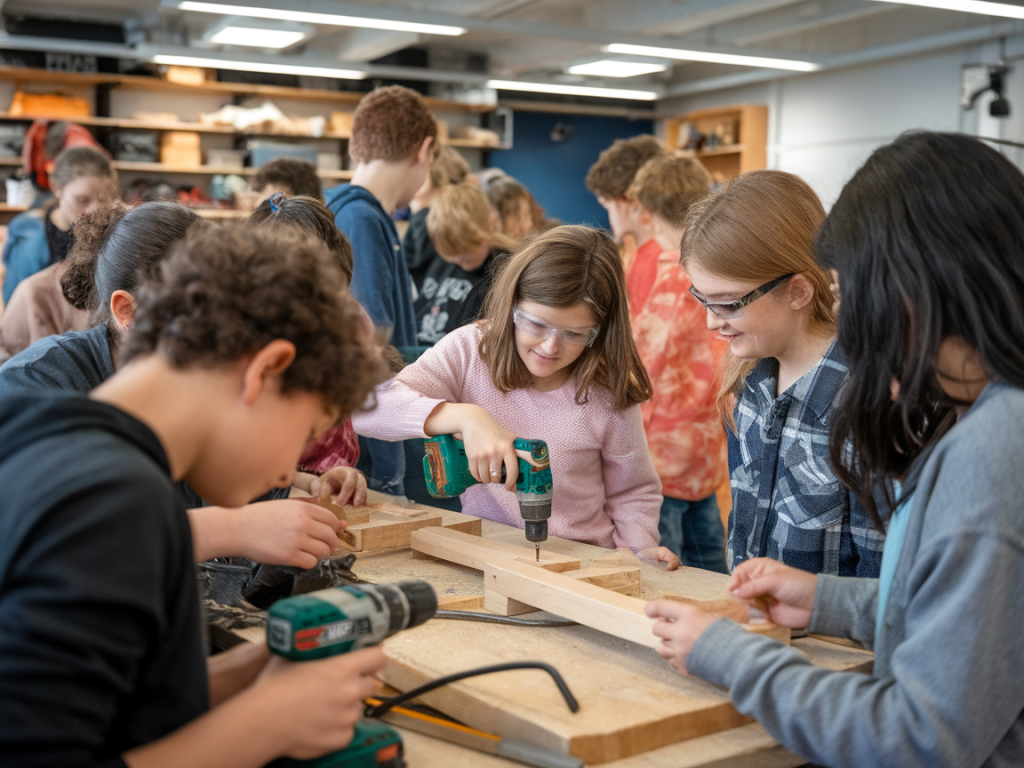
I often get asked how to translate a studio tutorial—one that I designed for a quiet, curious afternoon in my own workspace—into something that works for a classroom full of makers ranging from seven to seventeen. Over the years of running workshops and teaching mixed-age groups, I’ve learned that what makes a project sing in a classroom isn’t just the idea itself but the scaffolding: clear steps, flexible materials, simple differentiations and a few well-placed surprises to keep everyone curious.
Start by separating the kernel from the window dressing
Every tutorial has a core learning goal—the “kernel.” It might be learning how to make a simple paper mechanism, understanding colour mixing, or telling a tiny visual story in a single frame. Around that kernel sit lots of lovely extras: a delicate finish, an optional challenge, fancy tools. When adapting for a mixed-age class, identify what absolutely must happen for the project to succeed, and what can be optional. This lets you make a concise plan for beginners and a stretch plan for older or more confident students.
Design three tiers of engagement
I use a simple three-tier approach when I write lesson notes for classes:
For example, with a pop-up postcard tutorial: Core = cut-and-fold basic tab mechanisms; Extend = add simple illustrated backgrounds and a layer of translucent paper; Challenge = design a multi-stage mechanism that moves when the card opens.
Prepare the room and materials for varied hands
Classroom logistics matter. When I bring a project from the studio, I think about tools and materials that are robust and forgiving.
I also prepare small kits in resealable bags so each maker has everything they need—a time-saver and a calming sight when a table of kids bursts into creative activity.
Break the lesson into short, observable steps
Attention spans vary. I structure classes as a series of short activities (10–20 minutes) that alternate between instruction, making, and a brief regroup. This rhythm keeps momentum and gives tutors natural checkpoints for intervention.
Group strategically
When possible, mix ages intentionally. Pairing a younger maker with an older buddy creates natural mentorship, and older students often deepen understanding when they explain a step. If pairing isn’t ideal, create stations: a guided station for beginners, a discovery station for intermediates, and a challenge station for advanced makers. Rotate groups every 15–20 minutes.
Make instructions visual and tactile
I write step-by-step sheets with big images, but in class I lean heavily on models. A finished sample that shows process stages—raw cut pieces, half-built, finished—helps demystify. I also use small tactile prompts: a strip of tape showing where to fold; a dot indicating “glue here.”
Encourage personal narratives and small experiments
The magic in a project often comes from the personal touches. I prompt makers with simple story-starters that appeal across ages: “What secret does this character hide?” or “If this little machine could do one silly thing, what would it be?” These prompts let younger kids pick a visual gag while older students can layer in narrative complexity.
Offer low-stakes assessment and feedback
Instead of formal grading, I use three simple questions to guide feedback:
Invite students to write or draw a one-line note about their piece to stick on a display wall. This honors effort and gives you insight into each maker’s thinking without pressure.
Adjust for material budgets and classroom realities
Not every school has a big craft budget. I recommend:
| Studio option | Classroom-friendly swap |
| Specialty printmaking inks | Tempera paints or watercolour pans |
| Japanese washi paper | Colored tissue paper or recycled magazine pages |
| Low-temp glue gun | PVA glue and tape |
Remind yourself that constraints are creative fuel—limited colour, restricted tools or a small time window often push students into inventive solutions I wouldn’t have predicted.
Safety and classroom management tips
Set clear, simple rules and practice them once: scissors down unless seated; glue only on the work surface; ask before you borrow a tool. I keep a small “tool bank” at the front with extra blades, rulers, and pencils. For more delicate steps, offer adult help or a demo station.
Sample 50–minute lesson plan (paper-engineering postcard)
Adapting a studio tutorial for diverse ages is mostly about creating flexible entry points and preserving the wonder. If you keep the core learning goal clear, provide visual scaffolds, and build in choices, you’ll find that mixed-age classrooms produce unpredictable, joyful results—often better than the single-age workshops I started with. If you’d like, I can share a downloadable lesson sheet for a specific project—paper mechanics, simple printmaking, or found-object mini-sculpture—tailored to different age groups.